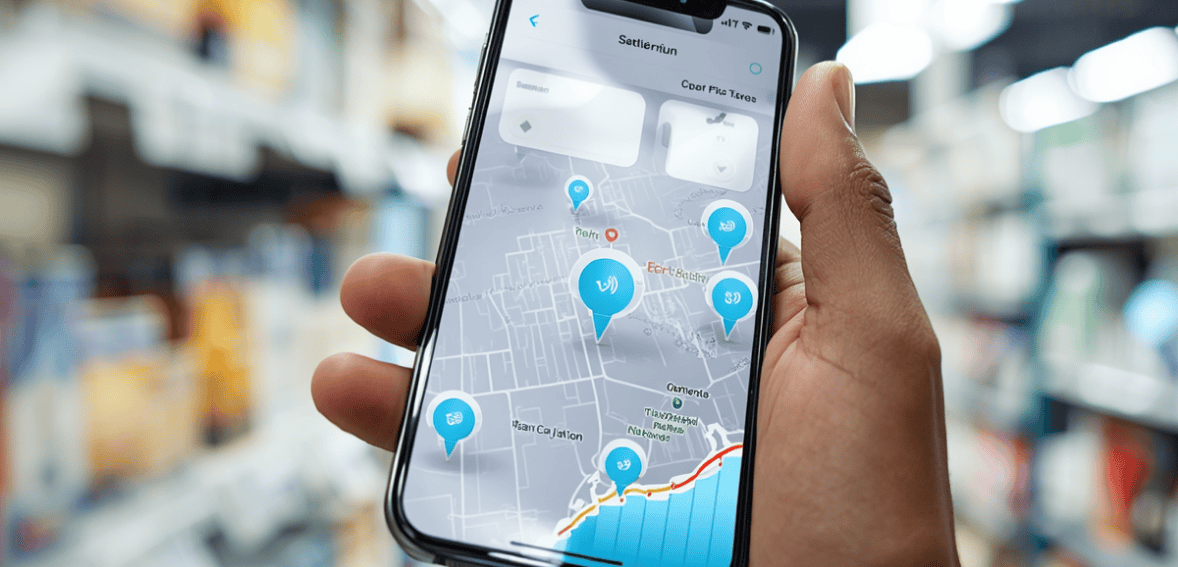
Modern retail business management in Texas involves much more than shelf management and customer relationship management. Today’s retailers face challenges where profit margins are determined by the effectiveness of each retail location. Whether located in Houston or the multiple outlets across Dallas, Austin, San Antonio, and Fort Worth, Texas, retailers require the ability to monitor customer payments and financial performance to grow. Consistent multi-location payment tracking is necessary to avoid challenges such as inaccurate financial statements, inventory gaps, employee theft, settlement delays, and cash flow uncertainty. Given these challenges, multi-location payment tracking is the foremost business operations strategy for retail businesses seeking to succeed and maintain a competitive advantage in Texas.
With the need for payment systems that can consolidate payment processing and reporting for each retail location, along with real-time tracking of key business performance metrics, there has been increased focus on Texas merchant services. The shift in customer payment preferences toward digital wallets and contactless payments, coupled with the demand for omnichannel retailing, has led retailers to recognize the need to control and monitor transactional flow across their businesses. Today, effective payment monitoring is essential to a retailer’s competitive strategy and is a determinant of customer service quality, inventory acquisition, workforce allocation, marketing, and overall business profitability.
Why Multi-Location Payment Tracking Matters for Texas Retailers

Texas has one of the largest and fastest-growing retail economies in the country. According to reports from the U.S. Census Bureau, retail sales are steadily rising as Texas’s population and economy grow, increasing consumer spending in the state. For retailers with multiple shops, this presents both challenges and opportunities. Each store has a unique transaction total, payment styles, tax methods, and refund and operational expenses. Retailers without unified systems will likely have a hard time identifying financial issues before they become significant costs or accurately assessing each store’s performance.
One of the biggest advantages of advanced payment tracking is visibility. When retailers can view transaction data across all stores in real time, they gain a clearer understanding of customer behavior and operational efficiency. A store in Austin may process significantly more mobile wallet transactions than a location in rural Texas, while another branch may experience unusually high refund rates. These insights allow businesses to adjust their strategies based on actual payment activity instead of assumptions.
Due to rapidly changing consumer payment habits, electronic and card-based payments have increased steadily, according to Fed Financial Services. Texas retailers that rely on fragmented systems and/or manual reporting spend a lot of time reconciling transactions themselves. A payment tracking system integrates and simplifies the process and retains the integrity of a business’s financial records.
Tracking Revenue Performance Across Every Store
Revenue tracking is the foundation of successful multi-location retail management. However, many retailers make the mistake of reviewing only total sales rather than analyzing how each location contributes to overall profitability. Payment tracking systems provide deeper insights by segmenting revenue by store performance, transaction type, peak sales periods, and payment method preferences.
Location A in Texas may show high sales, but low profits due to aggressive discounting or high refund rates. Some locations, like Location B, may process fewer transactions but be more profitable because they have a higher transaction amount. This information is critical. It is necessary to determine pricing, staff, manage stock, and decide where to allocate the marketing budget.
Texas merchant services allow retailers to track daily sales patterns and revenue through a centralized, continuously updated dashboard. Unlike the monthly reports that leave you waiting days, weeks, or months for an answer, you can figure out which location is selling the least and why, and then act on it. This is for seasonal Texas retail businesses, especially time-sensitive ones, since holiday shopping, tourism, and local happenings can change payment activity more than regular business activity does.
Understanding Customer Payment Preferences

Consumer payment behavior varies dramatically depending on location, demographics, and shopping environment. A suburban retail store may experience strong credit card usage, while an urban location may see increased adoption of digital wallets such as Apple Pay or Google Pay. Businesses that track these payment trends carefully can improve customer experience and optimize checkout efficiency.
Retailers can now see which payment methods customers prefer by location with modern payment-tracking systems. This helps retailers optimize payment acceptance and diminish transaction friction, ultimately increasing customer satisfaction. Customers prefer speedier payment systems, leading to larger average transaction values and a higher customer retention rate.
Rapid shifts in consumer behavior necessitate that Texas retailers focus on new payment systems. Instant, contactless payments, mobile payments, and integrated systems are all shaping new customer loyalty trends. Failure to implement new payment systems can result in losing customers to retailers that do.
Preventing Fraud and Reducing Financial Risk
Fraud prevention is another major reason retailers need strong multi-location payment-tracking systems. The more locations a business operates, the more vulnerable it becomes to internal theft, chargeback abuse, refund manipulation, and unauthorized transactions. Without centralized oversight, suspicious activity may go unnoticed for weeks or even months.
Sophisticated payment-tracking systems empower merchants to discern atypical buying behavior. Low refund rates, paired with high chargeback activity at the same location, could indicate fraudulent employee behavior coupled with lax payment security systems. Spotting issues early allows the retailer to correct problems before significant losses are incurred.
Payment security compliance must be prioritized. The PCI Security Standards Council issued pertinent minimum criteria to safeguard cardholder data and limit exposure to payment fraud. Retailers partnered with well-established Texas merchant services vendors to gain access to secure payment systems that support PCI compliance and encryption. Maintaining customer confidence and protecting sensitive financial data is paramount.
The Role of Inventory and Payment Synchronization

Inventory management and payment tracking are deeply connected in multi-location retail operations. When payment systems fail to synchronize properly with inventory data, retailers often experience stock discrepancies, overselling, or inaccurate financial reporting. These problems become especially challenging for businesses with both physical stores and ecommerce operations.
Retailers can automate the link between transactions and inventory movements by integrating payment and inventory tracking systems. These systems update inventory levels with each sale, helping maintain accurate stock visibility at all locations. Because of the increased inventory accuracy, stock forecasting becomes more effective, and operational inefficiencies are reduced.
Texas retailers whose demand fluctuates seasonally particularly benefit from these systems. Consider tourist-centric retailers with pronounced spikes in sales and demand during the holiday season and special events. Sellers can adjust their purchasing strategy to anticipate demand by using integrated payment systems and inventory trackers. This enables retailers to respond quickly and redistribute stock across locations to mitigate potential shortages.
Why Real-Time Reporting Is Essential
Traditional financial reporting methods are too slow for today’s retail environment. Waiting days or weeks for transaction summaries creates operational blind spots that can hurt profitability. Real-time reporting has become essential because it enables retailers to make faster, data-driven decisions.
Centralized payment tracking allows retailers to review daily performance metrics and sales data across all locations to understand multi-location transaction activity, refunds, employee performance, and customer spending. Having immediate access to this data informs business owners of sudden changes to performance metrics.
Management can assess an employee’s customer service performance, inventory and stock levels, and the marketing strategy if a single location has significant sales declines. This assessment can happen before the business experiences the full impact of lost sales. Real-time data further adjusts employees’ work schedules, optimizes promotional activities, and reallocates stock.
Flexible reporting is a feature of many Texas payment processors’ services. Advanced payment processors create customizable dashboards to help retailers easily conduct financial reconciliation. No more consolidating data across locations in a spreadsheet, and the system describes and shows performance for each location of a multi-location business.
Improving Customer Experience Through Centralized Payments

Customer experience plays a direct role in retail profitability. Consumers expect fast, seamless, and consistent payment experiences regardless of which location they visit. If payment systems vary significantly between stores, customers may become frustrated and less likely to return.
Centralized payment tracking allows each retail location to process transactions uniformly. Regardless of location, customers can pay and redeem rewards using the same methods. This strengthens brand loyalty and trust, boosting customer retention.
Retailers can process payment data to better customize the retail experience for customers. By analyzing payment methods and the time of day they are used, retail locations can offer custom ad promotions focused on a particular product that each customer is predicted to desire. Retailers can optimize the timing and methods shoppers use to make purchases.
Choosing the Right Texas Merchant Services Provider
Selecting the right payment processing partner is one of the most important decisions for multi-location retailers. Not all providers offer the same level of reporting, scalability, security, or integration capabilities. Retailers should prioritize merchant service providers that specialize in multi-location business management and provide centralized reporting tools.
An optimal Texas merchant services provider will offer real-time transaction analysis, inventory system integration, 24/7 PCI compliance, payment options across all channels, and flexible service structures that adapt to the needs of a maturing company. Customer support is incredibly important, as payment issues directly impact a customer’s sales and experience.
It is critical that a provider’s processing fees are free of hidden fees, unclear pricing structures, and opaque reporting, as these will cause financial headaches for years to come. The best options are providers who offer all of these traits and then some, with excellent customer support and cutting-edge technology.
Conclusion
Multi-location payment tracking has become an operational necessity for Texas retailers that want to compete effectively in today’s retail environment. Accurate tracking systems provide far more than transaction records. They deliver critical business insights that improve financial visibility, customer experience, fraud prevention, inventory management, and long-term profitability. As payment technologies continue to evolve and customer expectations increase, retailers that invest in centralized payment infrastructure will be better positioned to scale successfully across Texas markets.
Businesses that leverage advanced Texas merchant services can monitor performance in real time, streamline operations, and make smarter decisions backed by reliable data. In a competitive retail landscape where even small inefficiencies can impact profits, comprehensive payment tracking is no longer optional. It is a strategic advantage that helps retailers grow confidently while maintaining control across every location.
Frequently Asked Questions
What is multi-location payment tracking?
Multi-location payment tracking is the process of monitoring and managing transactions across multiple retail stores through a centralized system. It helps businesses track sales, refunds, payment methods, and financial performance across all locations in real time.
Why do Texas retailers need centralized payment systems?
Texas retailers often operate across large geographic regions with different customer demographics and shopping behaviors. Centralized payment systems improve visibility, reduce reporting errors, enhance fraud prevention, and simplify operational management across all locations.
How do Texas merchant services improve retail operations?
Texas merchant services help retailers process payments securely and provide advanced reporting tools, real-time transaction monitoring, inventory integration, and support for modern payment methods, including mobile wallets and contactless payments.
Can payment tracking help reduce fraud?
Yes. Advanced payment tracking systems quickly identify suspicious transaction patterns, unusual refund activity, and chargeback trends. Early detection helps retailers investigate problems before they cause significant financial losses.